
Size
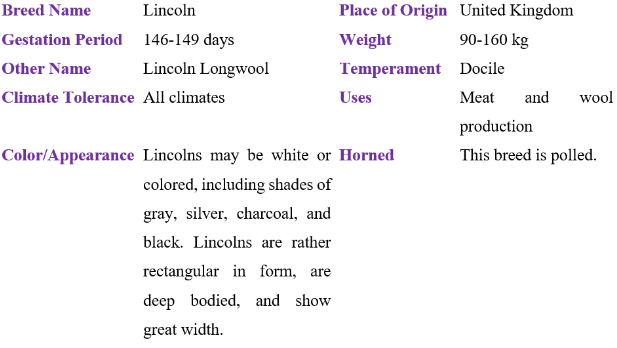
55 – 93 kg.
Color
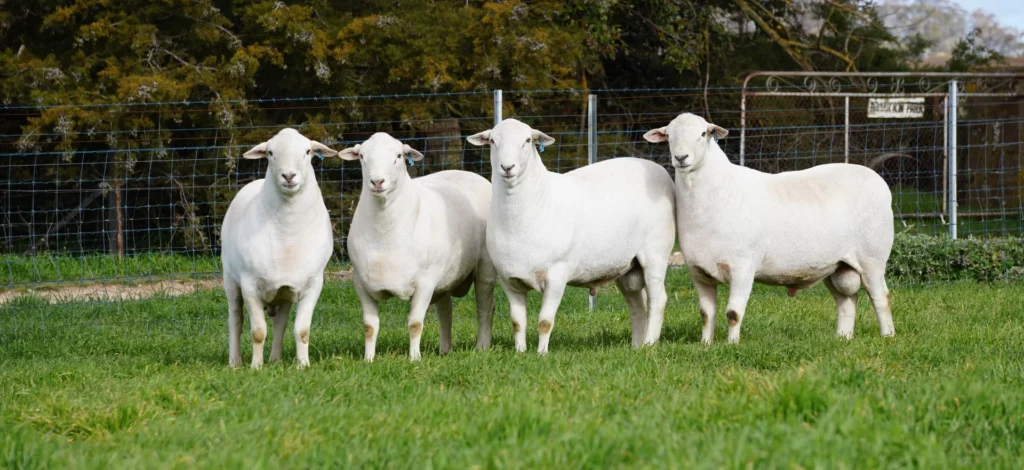
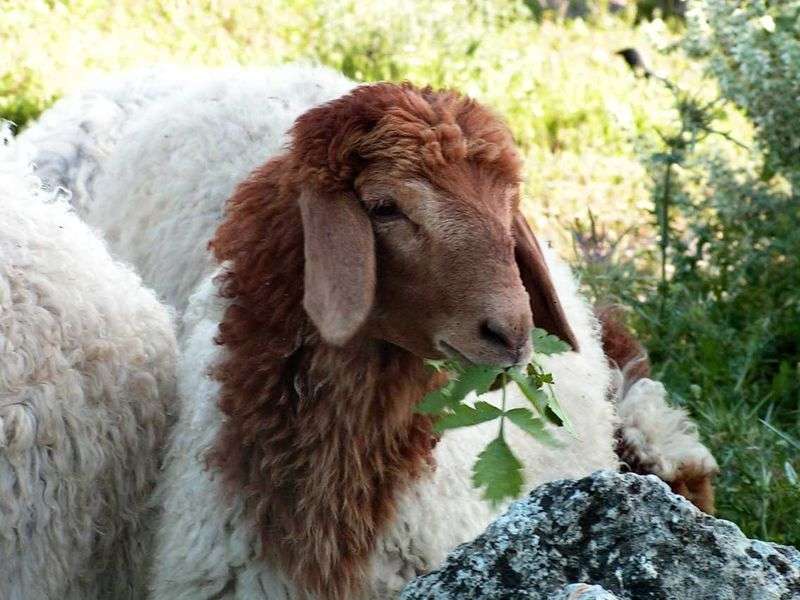
White or colored.
Physical Appearance
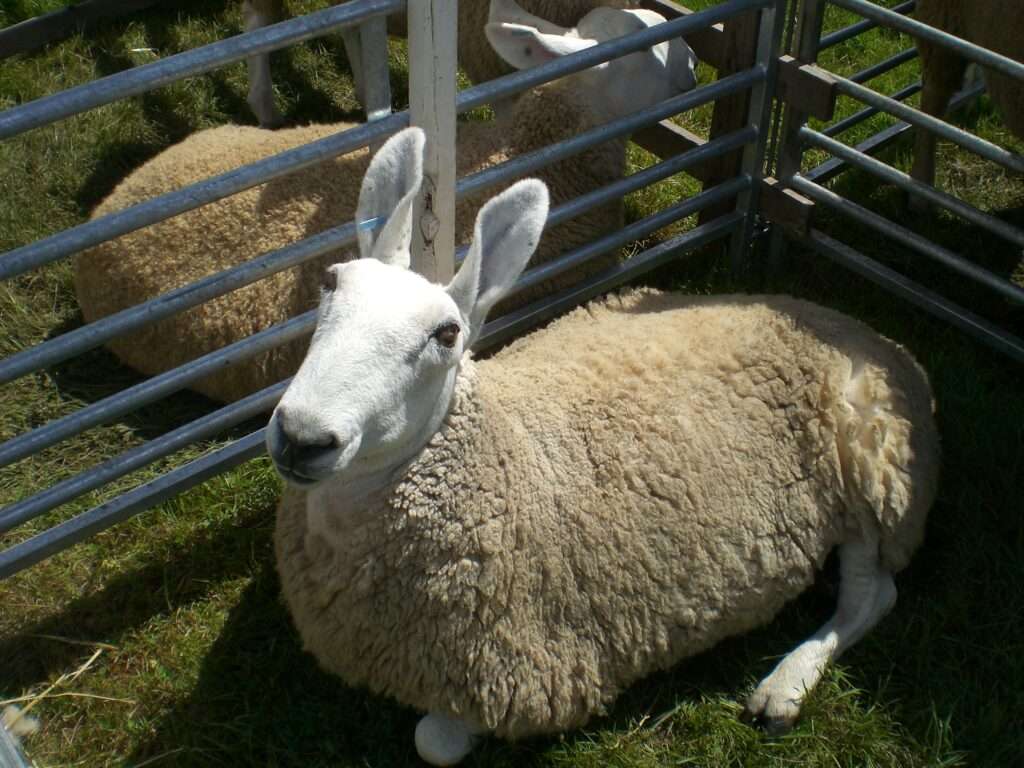
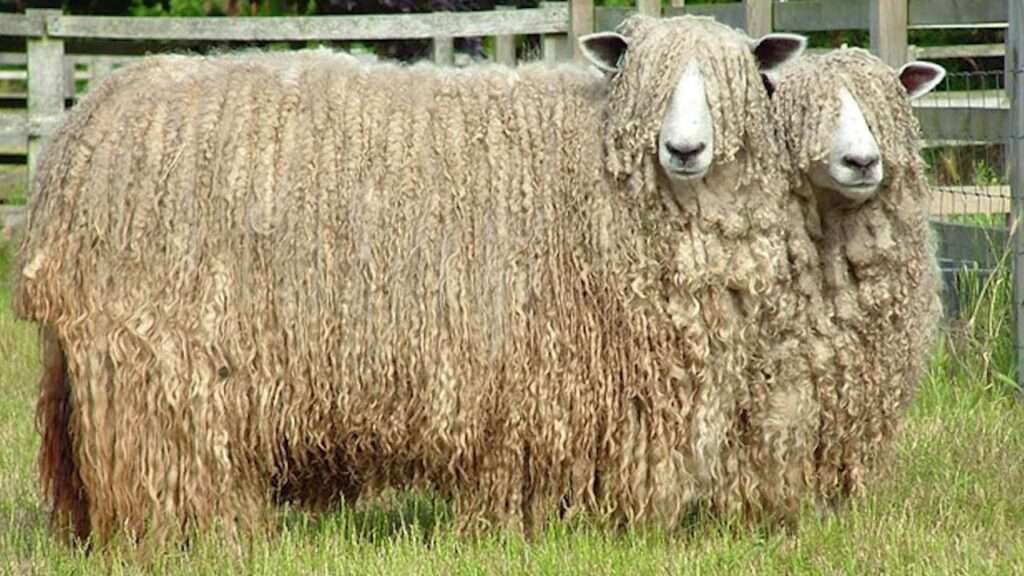
Lincolns are known for their lengthy lifespans and ability to keep clipping thick wool weights as they age. Lincolns have robust, durable teeth. Lincolns are very resistant to foot rot and have great feet. Lincolns have a large, well-muscled carcass and a lengthy cannon bone.
Characteristics and Genetics
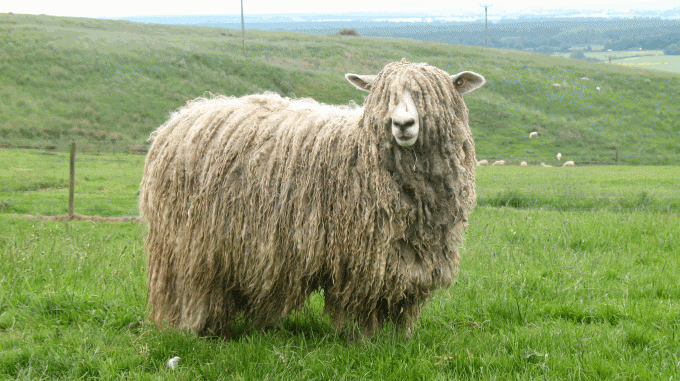
One of the earliest long wool breeds, the Lincoln originated in East Anglia, England’s Lincolnshire, more than 5000 years ago. All the long wool breeds in England are most likely descended from Lincoln. It is believed that the contemporary Lincoln first appeared around 1760 after the English Leicester and the original Lincoln were crossed. A problem for the Lincoln breed is the division among breeder groups on the status of naturally colored Lincolns. People who appreciate using the variety of colors present in the breed are concerned by the British Association’s policy of refusing to register colorful sheep. While keeping separate flock books for white and colored sheep, the National Lincoln Sheep Breeders Association in the United States recognizes colored Lincolns as belonging to the breed.
Uses
Lincoln sheep are multifunctional animals. They are reared to provide both meat and wool. However, they are renowned in particular for producing wool.
Special Statements
- Although the Lincoln sheep are strong creatures, they frequently have calm dispositions. The prolificacy of the Lincoln sheep should be regarded as average.
- The adult ewes are easy feeders, which might lead to them being over-conditioned and not reproducing as frequently as breeds that have a lower capacity for gaining fat. These creatures are voracious eaters.
- They utilize a great deal of pasture or high-quality roughage to great effect. They have a degree of footrot resistance and do well in cold and dry environments.
Table